
Consumer durables retailers and manufacturers may end up bearing the cost of the Reserve Bank of India's (RBI's) tightening on easy personal loans, as their margins are expected to be impacted by higher borrowing costs. During the recently passed festival season, consumer durables companies started offering longer tenure loans, zero down payments, and zero interest on a wider assortment of products than ever before, making the products more affordable. While 18- and 24-month easy monthly instalment (EMI) options were available earlier, companies offered them only on select products; now, they are being extended to a larger section of products.

In a move towards gender inclusion, Tamil Nadu has partnered Godrej Consumer Products (GCPL) to offer a 5 per cent job reservation for LGBTQAI+ and people with disabilities at GCPL's upcoming fast-moving consumer goods manufacturing unit in Thiruporur in Chengalpattu district. According to industry experts and activists, while companies acknowledge transgender communities, this is the first time the entire spectrum of gender minorities, including lesbian, gay, bisexual, transgender, queer/questioning (one's sexual or gender identity), asexual and intersex, is receiving such a notable share of job participation in the private sector while signing memoranda of understanding with states.

The supply chain for fast-moving consumer goods (FMCG) companies is seeing congestion due to persistently low demand. This has led to an increase in inventory days, with stocks accumulating at distributors and compelling them to extend higher credit periods to retailers. Distributors, Business Standard spoke to, revealed that demand inventory days have more than doubled in some cases, forcing them to offer credit terms as long as 45 days to retailers, as consumer offtake continues to face pressure.

Consumer durables firms and fashion retailers expect double-digit growth in value terms in the ongoing festival season as consumers have stepped up purchases during this period. They expect to see value sales growth upwards of 15 per cent, which is especially coming in from cities. However, volume growth may lag behind value growth.

Higher growth in vegetable demand relative to supply in the recent past has led to an upward trend in inflation, with spikes becoming more frequent. A study by rating agency Crisil found that vegetable inflation has been the most volatile in the food category, in fact. Inflation volatility is detrimental for both consumers and farmers and also sidetracks policymakers in the short term, necessitating frequent and repeated price-smoothing measures.
Fast moving consumer goods (FMCG) companies are expected to see muted topline growth, with uneven spread of the monsoon impacting demand. Rural demand recovery, too, remains elusive in the July-September quarter. Brokerages expect volumes to remain steady in the quarter on a sequential basis.

Sales of fast-moving consumer goods (FMCG) witnessed significant recovery in September after enduring a double-digit decline in August, according to data furnished by Bizom. Kirana stores in rural areas stocked up in preparation for the festival season, which began in September. This, combined with rainfall reaching 113 per cent of the long-perid average for the month, contributed to a boost in sales.

The government's decision to impose a 20 per cent export duty on parboiled rice and a $1,200 per tonne minimum export price (MEP) on basmati rice has pulled down overseas shipments of the former by almost 83 per cent and around 30 per cent of basmati exports in a month. Data sourced from various trade agencies and shippers showed that between August 25 and September 20, export of basmati rice has shrunk from 342,605 tonnes in 2022 to around 241,083 tonnes in 2023. Similarly, export of parboiled rice, after the imposition of 20 per cent duty during the same period, has dropped from 1.16 million tonnes in 2022 to just around 204,190 tonnes in 2023.

Higher inflation has again become a matter of concern for fast-moving consumer goods (FMCG) companies. After prices of commodities like sugar and wheat moved higher and stabilised at those levels, the crude oil too surged, adding to FMCG firms' worries. Besides, a dry spell in August in the ongoing monsoon season impacted rural demand.
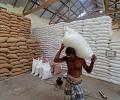
Amid the ongoing festival season and ahead of the elections for five state assemblies, the Centre is closely monitoring inflation, particularly in food items, to enable it to take steps to increase their supplies. "There is a complete no-nonsense attitude when it comes to food inflation, and instructions have been issued at all levels to be very sensitive to any possible price movements in any commodity," a senior official explained. Sources have said that all departments dealing with food items have been instructed to keep a close eye on all commodities and maintain a weekly record of their price movements.

The Centre, for the first time, has initiated a draft proposal for setting up an All India Institute of Medical Sciences (AIIMS)-like institute of national importance for animal health, education and research in Delhi to be called the All India Institute of Veterinary Sciences (AIIVS).

After a steady surge, prices of pulses, except those of urad and masoor to some extent, are showing signs of stabilising amid a revival of monsoon rains over major growing areas of Maharashtra and Karnataka, and on expectations of a rise in imports. Chana prices, which too had moved up in recent months, have dropped by almost 3 per cent since the end of August due to increased liquidation of government stocks, official data shows. Monsoon rains seem to have benefitted the standing soybean crop as well.

India's recent move to remove additional 'retaliatory' duty on eight products from the United States (US), including apples and walnuts, would not have any negative impact on the domestic producers, the government clarified, even as the issue threatened to snowball into a political slugfest between the ruling and Opposition parties. The move would, in fact, result in competition in the premium market segment, ensuring better quality at better prices for consumers, especially for apples, a senior government official said. "There were certain concerns that were being raised on the mutually agreed solution that has come in, more specific to seven-eight agriculture products where we had levied additional import duties in retaliation to the steel and aluminum measures (imposed by the US)," Peeyush Kumar, additional secretary in the commerce department, told reporters in a briefing.

In the coming months, globally as well as in India, rice might remain a hot potato.

'He doesn't need to play eye candy or a boy next door. He has found his mark.' 'Brands like him because he understands them and he emotes appropriately for them.'

An exhibition on the origins of Indian art, culture, handicrafts, and India's grassroots farming innovations is scheduled for September 9 and 10.

Even before NCP-Ajit Pawar leaders came to meet in Delhi, the central government decided to buy 200,000 tonnes of onions from farmers at Rs 24.1 per quintal. This was among the highest prices at which onions have ever been bought from farmers.

Any long dry spell could cause moisture stress in the standing crop during the crucial maturing stage and also make it prone to pest and disease attacks.

A prolonged break in monsoon rains in most parts of the country is threatening to hit the yield of kharif crops. It could even delay the upcoming rabi sowing. Major agricultural states, such as Maharashtra, Madhya Pradesh, Andhra Pradesh, Punjab, and Gujarat, have witnessed a deficit of 30-80 per cent in southwest monsoon rainfall in August compared to the long-period average for the month. Meteorologists see no big revival in monsoon rains from hereon, though they forecast "some activity" over the Bay of Bengal on September 5-6.

With Onam and Raksha Bandhan just around the corner, the festival season is ready to kick off in full swing. As people embrace the celebratory spirit, companies anticipate a surge in sales this year. Consumer durables firms are expecting strong growth of 40-50 per cent in the premium segment during the upcoming season. Appliance makers also foresee increased demand for cooling appliances - refrigerators and air conditioners - which were impacted by unseasonal rainfall.
 © 2026 Rediff.com - Investor Information - Advertise with us - Disclaimer - Privacy Policy - Sitemap - Feedback - About us - Terms of use - Grievances